Eugene Ionesco, arguably one of Theatre of the Absurd’s greats, is receiving his first National Theatre staging in Exit the King, adapted and directed by Patrick Marber.
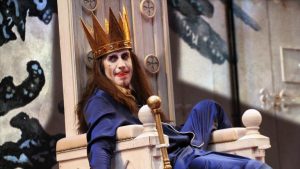
Courtesy of Simon Annand.


Eugene Ionesco, arguably one of Theatre of the Absurd’s greats, is receiving his first National Theatre staging in Exit the King, adapted and directed by Patrick Marber.
Courtesy of Simon Annand.
A fresh new outlook and dazzling interpretation of one this country’s most beloved and traditional storylines, York Theatre Royal welcomes audiences on a trip down memory lane.

Courtesy of Ian Hodgson.
This year marks two significant anniversarys; the first being the execution of the Romanov Family, the ruling family of Russia up until the February Revolution and Russian Revolution in 1918 – a century ago, and the 50th anniversary of the assasination of Martin Luther King Jr, one of the most influential figures within the Civil Rights Movement in the US. These two events would go on to make an impact on history thereafter, politically and socially. Nichola McAuliffe draws on these two significant historical events in her latest piece, Revenants – set 25 years prior to the latter event, and 25 years after the former. Read on to find out more about the show.

We now find ourselves living in a world whereby having an online presence can prove powerful. A single image or headline can travel the lengths and breadths of the world in a matter of minutes. Traditional news outlets perhaps not the first point of call when finding out the latest headlines, independent publications are now finding that their voices are proving very influential. Renowned for their exploration of timely topics through physical theatre and puppetry, Theatre Témoin return to the Edinburgh Fringe Festival to showcase their latest project, Feed, exploring this new digital world we find ourselves living in. Contributing playwright Eve Leigh tells us more about the company’s current piece.
In three hours three extraordinary actors perform three acts. Ben Power’s magnificent adaptation of Stefano Massini’s epic novel follows the story of a family that made the one of the biggest impacts in America’s history. That same nation is still feeling the consequences of the brother’s actions today.
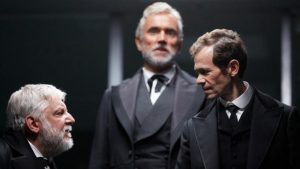
Courtesy of Mark Douet.
The National Health Service and Alan Bennett are two of Britain’s most loved treasures. Only last month did the NHS reach the grand age of 70 years, and it’s the celebration of ageing that frames Bennett’s new play at the Bridge theatre.

Courtesy of Manuel Harlan.
London is renowned for its multi-culturalism, it’s an aspect of the city that makes it great. Immigration is an element of society that has had a great focus placed on it, and mainly for the wrong reasons. Director Katharina Reinthaller discusses directing Cecilia Gragnani’s Diary of an Expat, a show inspired by Cecilia’s own story of leaving Italy to pursue a new life in the UK.

One of the strongest bonds you’ll share is that with a sibling, they’re there through the highest and lowest of moments, they’re you’re best friend as well as family. Every family deals with phases that test one another which can further strengthen bonds. Alexandra and Kate Donnachie explore the affects of one sibling being diagnosed with an eating disorder as a teen in their latest show, 3 Years, 1 Week and a Lemon Drizzle. The duo discuss the process of creating the show and what audiences can expect.